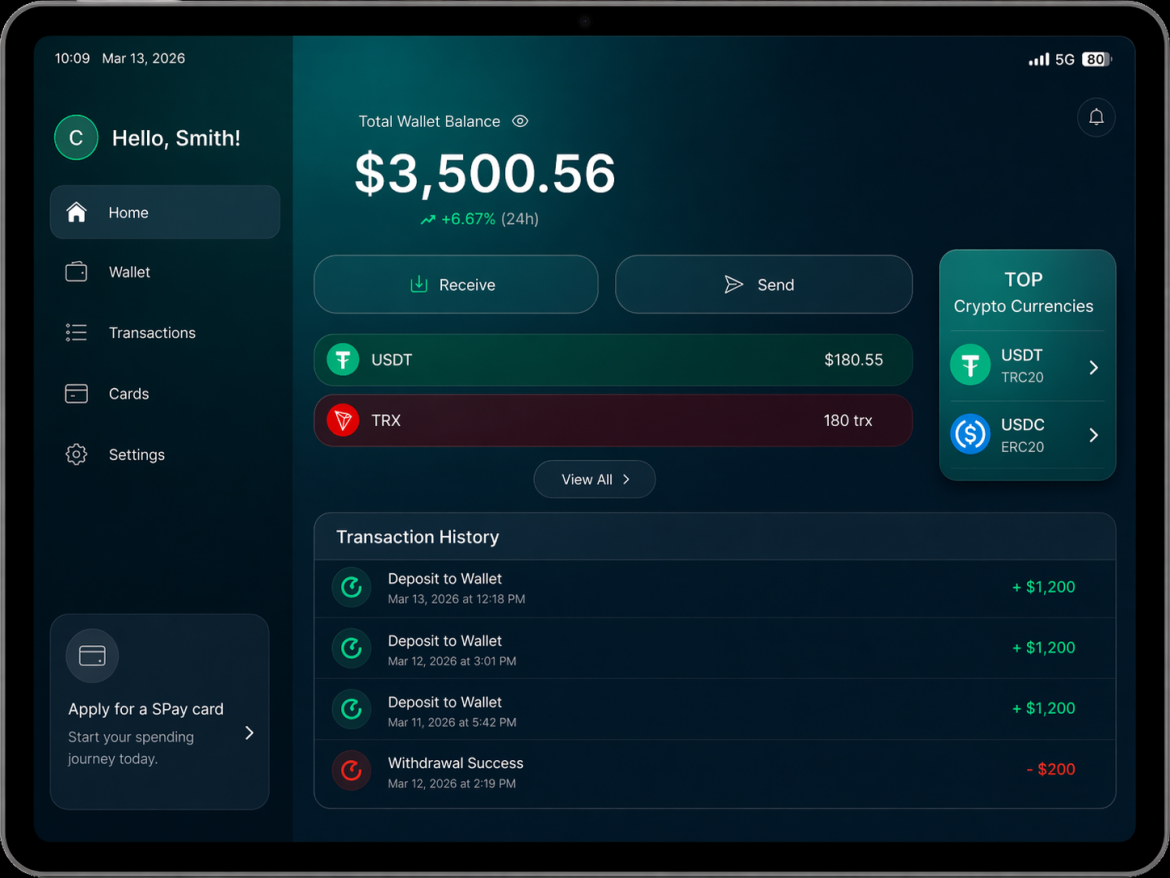
Freelancing gives skilled workers access to clients worldwide, but international payments can bring delays, conversion fees, and banking limits. Crypto offers another payment option for remote professionals who want faster access to funds. A freelancer can receive digital assets from a client, hold them in a wallet, and use a USDT card when everyday spending calls for regular currency.
Accept crypto payments from clients
Freelancers can agree with clients to receive payment in cryptocurrencies such as Bitcoin, Ethereum, or stablecoins. The client sends the agreed amount to the freelancer’s wallet address. This process can work across borders without relying on traditional bank transfers. Stablecoins can suit freelancers who prefer a digital asset linked to a fiat currency. They may also reduce exposure to sharp price changes compared with assets that move heavily during market shifts.
Convert crypto into fiat for spending
A crypto debit card connects digital assets with regular purchases. When a freelancer pays at a store or online checkout, the card provider converts the selected crypto balance into fiat currency for the transaction. This setup gives freelancers access to everyday spending without manually selling crypto before each purchase. Funds may cover groceries, software subscriptions, travel costs, or business expenses.
Watch fees and exchange rates
Every payment service has its own fee structure. Freelancers should check conversion charges, withdrawal costs, transaction fees, and exchange rates before selecting a card. A low advertised fee does not always mean the lowest total cost. The exchange rate also affects the final amount available for spending. Comparing several providers helps freelancers keep a larger share of their earnings.
Keep records of crypto income
Freelancers should maintain clear records for every payment. A simple spreadsheet can track the date, crypto amount, value at receipt, client payment, conversion, and spending activity. Tax rules differ between countries, so freelancers should check the rules that apply to their tax residence. Good records make tax reporting easier and provide useful proof of income.
Protect wallets and card accounts
Security deserves close attention when digital assets fund daily expenses. Freelancers should use strong passwords, two factor authentication, device security, and trusted wallet services. Keeping large balances on a spending card may also increase exposure to loss. A freelancer can keep spending funds separate from long term holdings and review account activity regularly.